
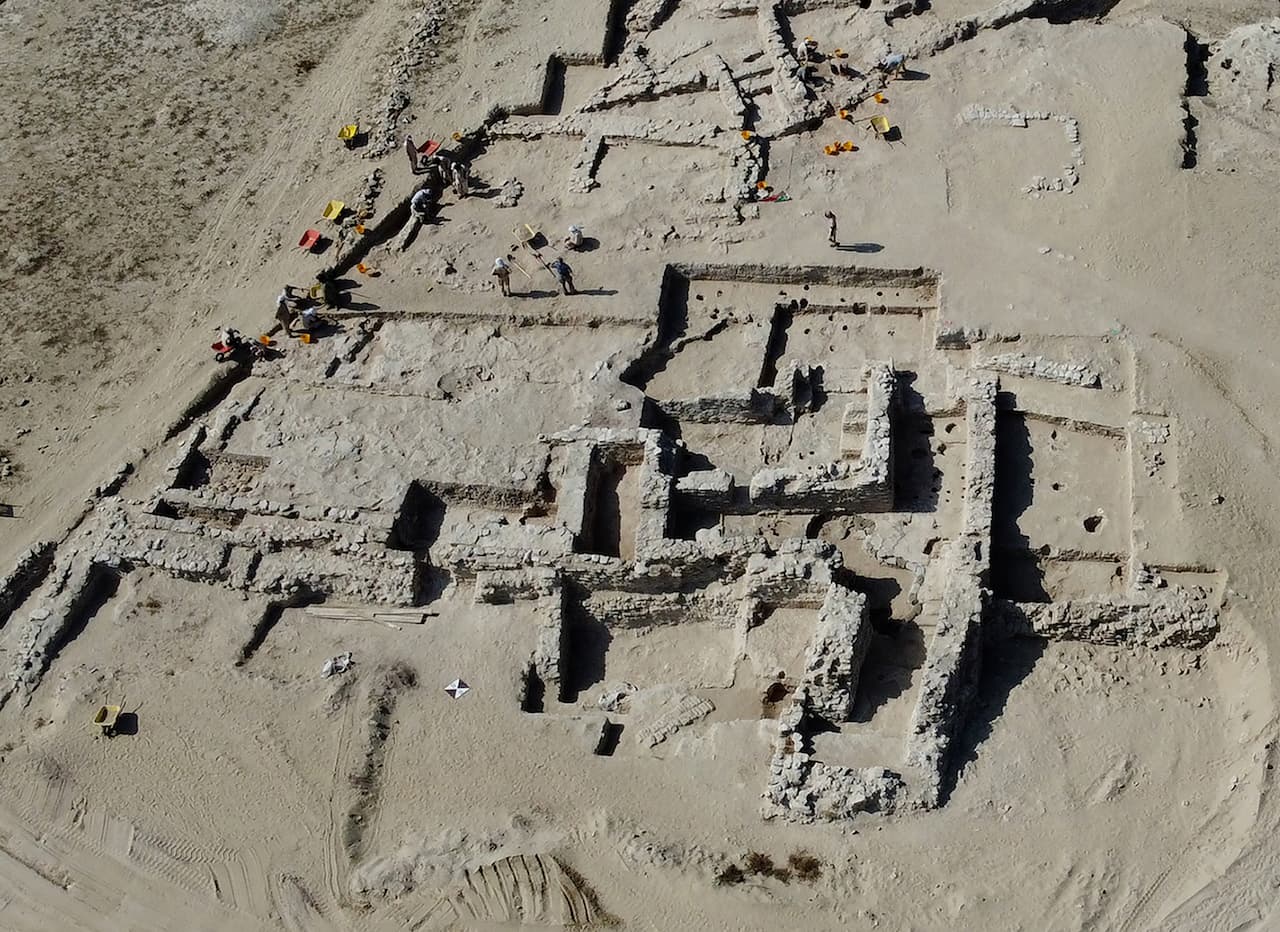
A settlement in the United Arab Emirates, a witness to commercial and cultural exchanges from the Bronze Age to the beginning of our era, sheds new light on the ancient history of maritime and terrestrial networks.
On the western coast of the United Arab Emirates, a mound of earth known as Tell Abraq holds a millennia-old secret: more than 3,000 years of continuous human history, an exceptional testament to how this region served as a crossroads for cultures and trade since ancient times. Recent archaeological excavations at the site are revealing the intense life that once thrived here, uncovering two key periods of long-distance connections that linked southeastern Arabia with Iran, Mesopotamia, India, and even the Roman world.
Tell Abraq is not a new site for archaeologists, but recent investigations, carried out since 2019 by the Italian Archaeological Mission in Umm al-Quwain (IAMUQ), are rewriting its history with an unprecedented level of detail. The project, led by Dr. Michele Degli Esposti of the Institute of Mediterranean and Oriental Cultures at the Polish Academy of Sciences, focuses on the eastern part of the tell, and its findings paint a picture of remarkable continuity and integration into trade networks that extended far beyond the Persian Gulf.
Tell Abraq offers valuable insights into the long-term evolution of maritime and terrestrial connections in southeastern Arabia, says Dr. Degli Esposti in the article published in the journal Antiquity. This assertion is supported by the discovery of two main phases of intercultural contact: one during the second half of the second millennium before Christ (BCE) and another between the first and third centuries of the Common Era (CE).
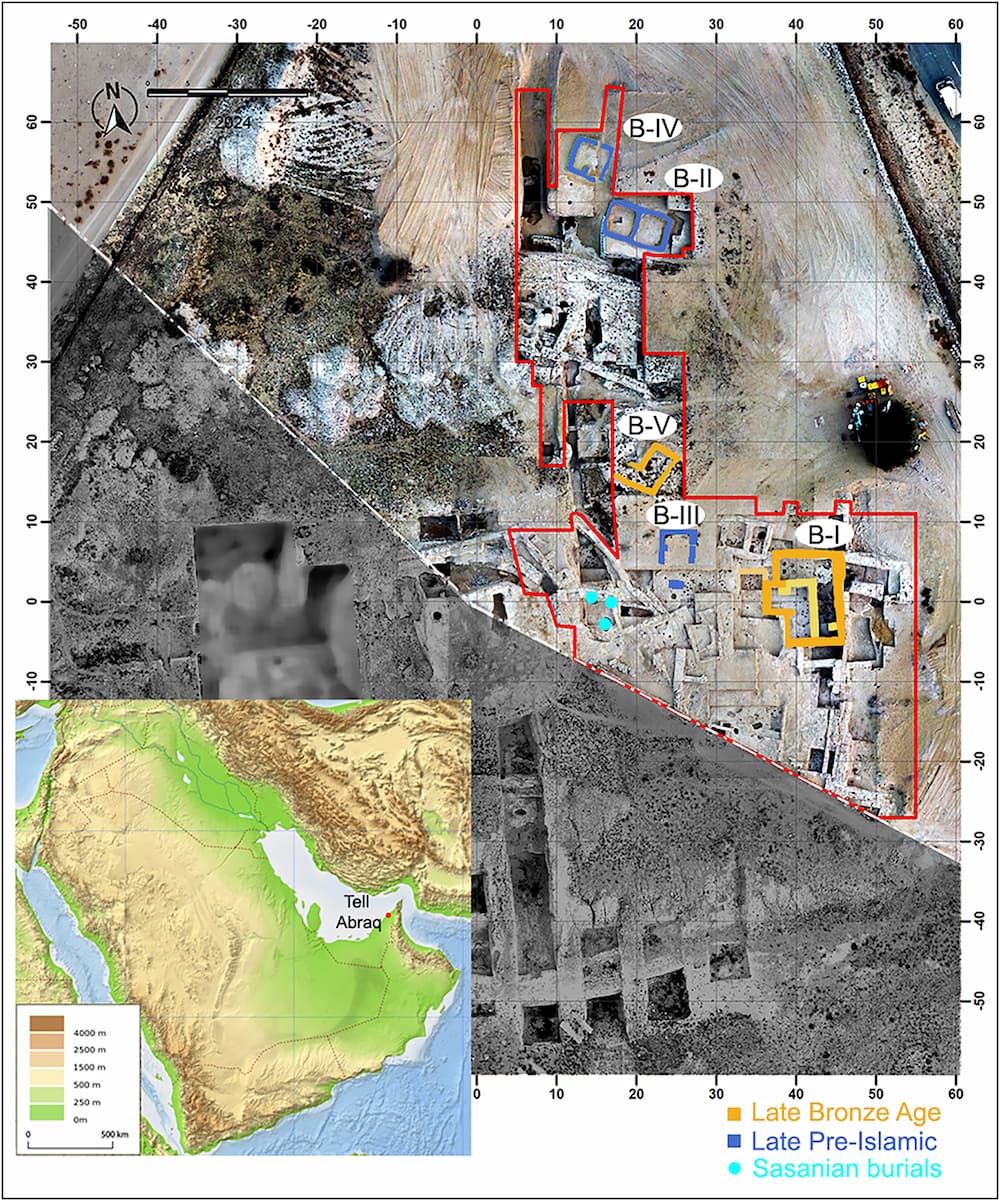
The importance of Tell Abraq lies in its nearly complete stratigraphic sequence, spanning from around 2500 BCE to possibly the fourth century CE. This means that within its layers of earth, archaeologists can read the history of the successive cultures that inhabited southeastern Arabia, a territory that, although it never developed complex state structures like its neighbors, managed to weave intricate trade networks.
The Early Bronze Age (2700–2000 BCE) saw the construction of a tower, and in the Middle Bronze Age (2000–1600 BCE), a terrace system was developed. But it is in the Late Bronze Age (1600–1300 BCE) and the Iron Age (1300–300 BCE) that the site shows particularly notable activity.
One of the most significant discoveries of this campaign is Building B-I, a large stone structure built between the late fourteenth and early thirteenth centuries BCE. What makes B-I unique in the entire region is the extensive use of a hard mortar as a bonding material and for coating surfaces, a construction technique with no known parallels.
However, the real interest in B-I lies not only in its walls but in what was found inside. The ceramic assemblage associated with the building includes a high proportion of vessels that were likely imported from southeastern Iran. Among them are medium-sized storage jars made from dense, sandy clay.
The strongest evidence of their foreign origin are the impressions of cylinder seals found on two of these jars. The iconography of these seals is linked to the artistic repertoires of southern Mesopotamia and Elam (in present-day southwestern Iran). In addition, the original floor of the building preserved the hollows where these same jars were placed, confirming their use in situ.

The combination of architecture with no local precedents and the concentration of imported goods from prestigious cultural areas suggests that B-I was more than just a warehouse. The prominence of B-I suggests that it was more than a simple warehouse; a potential role in the control and redistribution of foreign goods is supported by the rarity of imported ceramic fragments in other areas of the site, the study reads. Archaeologists hypothesize that this building may have been a commercial control post, perhaps managed by representatives of external powers who oversaw the flow of goods in the region, possibly under the influence of the Kassites or Elamites, major powers in the Gulf at the time.
After this period of intense activity and connections, occupation at Tell Abraq appears to decrease significantly during Iron Age II (1100–600 BCE). Excavations from this period reveal mainly domestic space and kilns that were sometimes reused as trash pits. The near absence of imported goods suggests a period of reduced external contact.
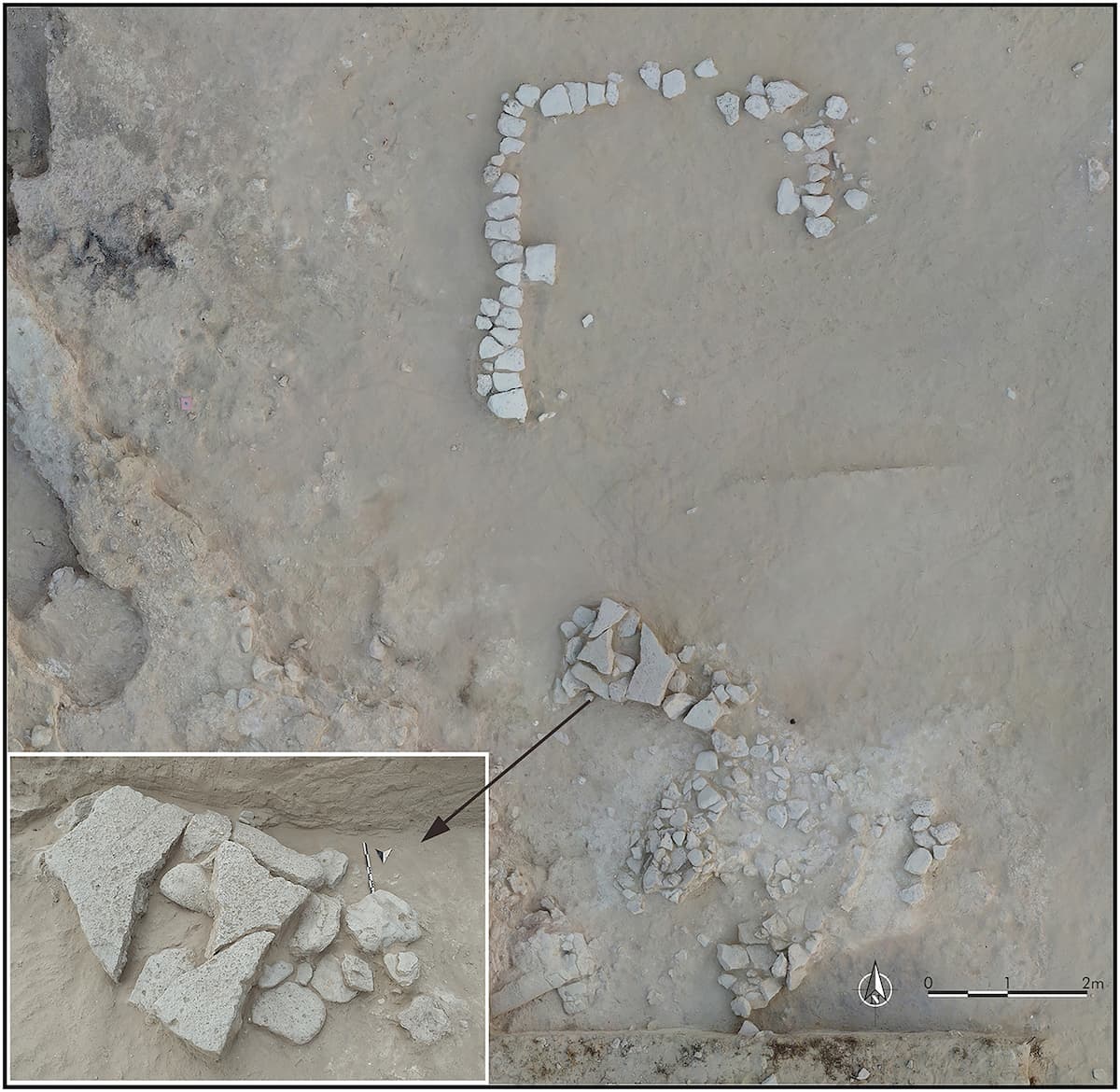
The site regained importance centuries later, during the late pre-Islamic period (300 BCE–300 CE). But its nature changed completely. Residential occupation ceased, and Tell Abraq was transformed into a place of worship. The center of this activity is Building B-III, a small sanctuary that housed an open-air altar.
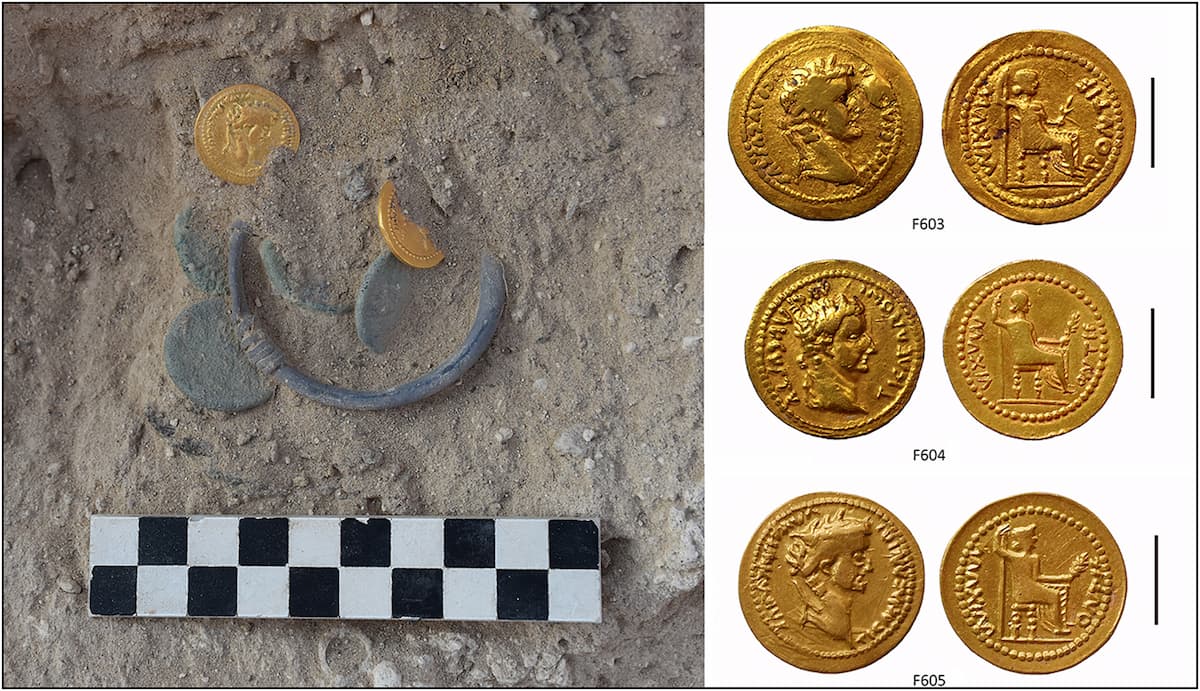
It is in this sacred context that the second major peak of intercultural connections is documented. The finds in B-III are extraordinarily varied and revealing: clay and bronze figurines, local bronze coins, imitations of Roman aurei (gold coins), stone statues, and an Aramaic inscription.
Each of these objects tells a story of global connections. The Hellenistic-style figurines, the coins imitating Roman ones, and the Aramaic inscription—a lingua franca of the time—indicate ties with the Roman Levant and southern Mesopotamia. The stone statues point to connections with South Arabia and the Arabian Peninsula in general. Taken together, these artifacts not only show a flourishing maritime network, they also hint at an active land-based network alongside the maritime one.
Researchers believe that B-III functioned as a place of worship where merchants, in their long sea and land journeys, sought the favor of deities or gave thanks for successful voyages. The sanctuary would thus have acted as a kind of spiritual service station for merchants crossing the Persian Gulf, similar to what has been documented in the temple of Shamash at the nearby site of Ed Dur.
Research at Tell Abraq demonstrates that southeastern Arabia was not an isolated space, but a dynamic actor in ancient exchange networks. The pattern that emerges is clear: the periods of greatest influx of exotic goods at Tell Abraq coincide with times of strong external political influence in the Gulf. In the second millennium BCE, these were the Kassites and Elamites; in the early centuries CE, the kingdom of Characene, a client state of the Parthian Empire that controlled trade at the head of the Gulf.
However, the nature of this influence varied. While the connection in the late pre-Islamic period appears to have been purely commercial, evidenced by votive offerings of diverse origin, Building B-I of the Late Bronze Age may reflect a stricter external control of trade, possibly exercised by representatives on site.
Ultimately, Tell Abraq tells the story of how a small settlement on the coast of the United Arab Emirates managed, over three millennia, to navigate the currents of global history, adapting and thriving as an indispensable link in the routes that connected the great empires of antiquity.
SOURCES
Degli Esposti M. Tell Abraq: cross-cultural connections in the Persian Gulf from the Late Bronze Age to the early centuries AD. Antiquity. Published online 2025:1-8. doi:10.15184/aqy.2025.10246
link