
Let’s begin. I’d like to start by talking about travel to Japan. For more than 150 years, Japan has continued to attract visitors from all over the world. This is evident from numerous data points—Japan consistently ranks among the top destinations on global travel and tourism indices. Last year, Japan recorded the highest growth among tourism markets such as Sri Lanka and Thailand. And in 2024, it is again projected to lead the world in the rate of growth in international arrivals. This year, the target is around 40 million inbound visitors. With that in mind, what do you think defines Japan’s appeal?
Japan is, of course, a country with a long and rich history, but for a long time it wasn’t a destination that received much global attention. In recent years, however, we’ve seen a remarkable increase in visitors from overseas—people who are genuinely fascinated by Japan.
One of the main reasons for this growing attention, I believe, has to do with the passage of time and the changing generations since the war. The lingering resentment and emotional scars from World War II had, for decades, created invisible barriers between Japan and some other nations. Although Japan has long been an ally of countries like the United States, emotional wounds remained—many families on both sides lost loved ones, and those memories made it difficult for genuine cultural exchange to flourish.
But as generations have changed, those sentiments have faded. The younger generation today doesn’t carry that same burden of wartime memories. We’ve entered an era where people—especially in the U.S. and Europe—see Japan not through the lens of the past but with fresh curiosity and appreciation. That generational shift has opened the door for many to experience Japan as it truly is.
At the same time, Japan itself has evolved. Tokyo, for example, has become one of the most convenient and advanced cities in the world—modern, efficient, and full of innovation. This transformation has made Japan not only more livable for its residents but also more accessible and appealing for global travelers.
In addition, many international visitors are drawn to Japan’s deep spiritual and cultural traditions, particularly Buddhism. There’s a growing global interest in mindfulness, simplicity, and spiritual balance—values that are deeply rooted in Japanese culture. Combined with the country’s technological sophistication, efficient transportation such as the Shinkansen, and its globally celebrated cuisine, these factors make Japan uniquely attractive.
So, I think it’s this combination—the fading of historical tensions, the emergence of a new open-minded generation, and Japan’s fusion of tradition with modern convenience—that has made the country so appealing to travelers from around the world.
Thank you for that insight. Let’s move on to the future of Japanese tourism. Tokyo and Osaka have always been key centers for international tourism, but the Japanese government is also focusing on promoting regional revitalization through travel. In that context, how do you view the potential of destinations beyond Tokyo, Osaka, and Kyoto? What areas would you recommend, and how do you see demand for regional travel evolving?
Yes, the “Golden Route”—Tokyo, Kyoto, and Osaka—has always been the main attraction for first-time visitors to Japan. But beyond those major cities, there are countless destinations of remarkable natural beauty and deep cultural character.
Personally, I would recommend two regions above all: Hokkaido in the north and Okinawa in the south. Hokkaido is blessed with magnificent nature, delicious food, and many hot springs. Okinawa, on the other hand, offers an entirely different charm with its subtropical climate, stunning beaches, and distinct culture shaped by its Ryukyu heritage.
Tohoku, too, is wonderful—especially for travelers who enjoy onsen culture and a slower, more traditional pace of life.
Your company’s headquarters are in Tokyo, but how are you engaging with regional tourism through your business activities?
Our roots are in Tokyo, but the principles guiding our approach apply everywhere. When we launched our “Ent Terrace” series of hotels, we realized there was a gap in the market for family-oriented, long-stay accommodations. At the time, there were few hotels that provided spacious rooms and home-like amenities.
So, we created properties featuring 40 to 50 square meter rooms equipped with kitchens, washing machines, and refrigerators. This made them ideal for families or groups staying for longer periods. The concept resonated strongly with international guests—families could stay comfortably together, enjoy more space, and pay a reasonable rate.
That’s what we mean by responding to the market. We saw a clear need and created something that directly addressed it.
Within your hotel brands—such as Ent Terrace and Jinryu—what would you say are your competitive advantages in such a dynamic market?
The most important factors are location, design, and operational control.
First, we select prime sites—around Tokyo’s Yamanote Line in popular areas like Asakusa, Akihabara, Ginza, Shinjuku, and Ueno.
Second, all of our hotels are directly managed by our own team. By operating them ourselves, we can ensure consistently high service standards and immediate response to guest needs.
Third, each brand has a unique concept. Ent Terrace is family-friendly and practical; Jinryu is rooted in Japanese culture and spirituality, focusing on harmony and traditional aesthetics; and Global Design Hotels emphasize luxury through collaborations with iconic international brands like Cassina and Armani.
Together, they form a diversified yet coherent portfolio.
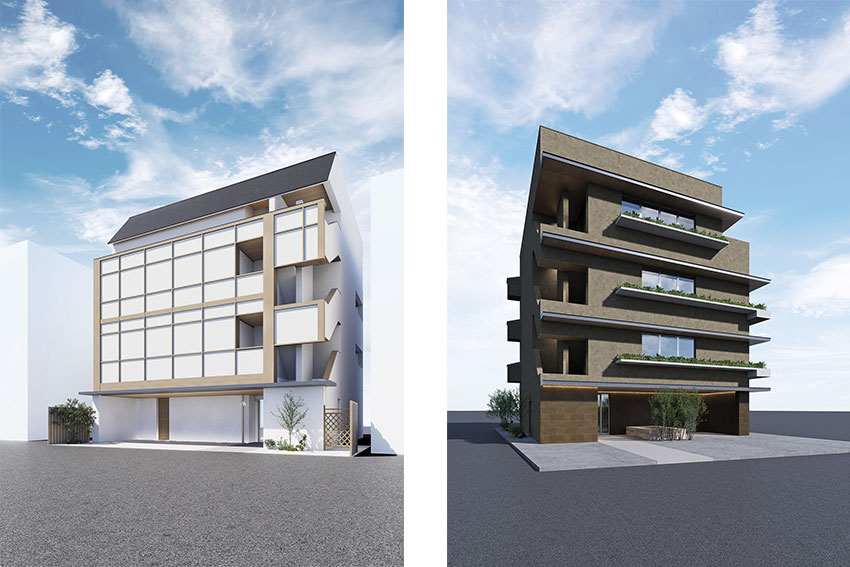
Left: Ise Hotel Exterior. Right: Izumo Hotel Exterior
Across the global hospitality industry, labor shortages and demographic challenges have led to increased automation. Yet, for premium hotels, maintaining a personal, human touch is vital. How is Lead Real Estate addressing these workforce challenges?
From my perspective, Japan’s so-called “labor shortage” is not as serious as people think—at least not for us. If you only look at the Japanese labor pool, it may seem challenging, but our workforce is already international.
We have many dedicated and skilled staff from across Asia—China, Hong Kong, Taiwan, and other countries—who contribute significantly. They are responsible, multilingual, and highly capable. So, our operations naturally function in an international environment, which suits our guest demographics.
We don’t limit ourselves by nationality. What matters is passion and ability, not where someone comes from. In our hotels, diversity strengthens us—it’s not a problem to solve, but an asset to embrace.
Many of your properties perform extremely well on platforms such as Booking.com. What is the secret to maintaining that consistent success?
It comes down to timing, planning, and alignment with market needs.
As a real estate developer, we excel at three things: speed, planning ability, and decision-making. We know how to choose the right location quickly, develop strong concepts, and execute efficiently. Those are the same skills that make a great developer—and they translate perfectly into hospitality.
Could you share more about your future hotel developments and where new properties will be opening?
We currently have around 20 new hotel projects underway. Some are already under construction—such as one in front of Shinjuku Gyoen—and others are in Ueno, Meguro, and Gakugei Daigaku, which is known as one of Tokyo’s most creative neighborhoods.
These upcoming hotels will span all three of our core brands: Ent Terrace, Jinryu, and the Global Design series. We’ve already secured land in several prime locations, and we’re moving forward with development.
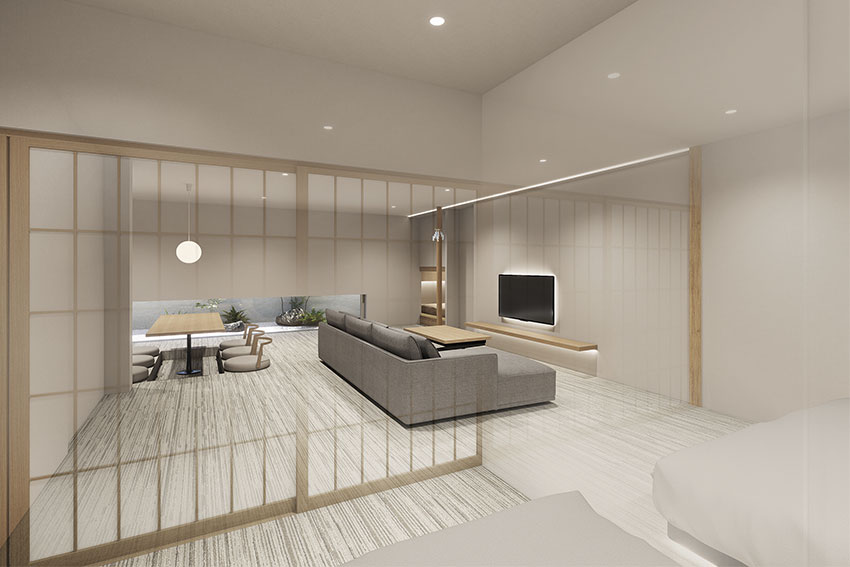
Ise Hotel Interior
Turning to the Jinryu Hotel series, which emphasizes cultural and religious heritage—how did that concept come about, and what makes it unique?
We realized that Japan lacked hotels that truly reflect its spiritual and cultural identity, especially near important religious landmarks. Jinryu was created to fill that space.
These hotels are designed with the spirit of “Wa”—the Japanese sense of harmony—and are inspired by places like Ise Jingu and Izumo Taisha. The rooms are spacious, around 60 to 70 square meters, and use natural materials to create a calm, reflective environment.
There’s strong demand for this kind of accommodation. In many of these regions, there simply aren’t enough hotels of good quality, so travelers often end up leaving the area instead of staying overnight. We want to change that by creating properties worthy of these sacred sites.
Drawing from your experience in real estate and hospitality, what lessons or philosophies guide you as you expand the Jinryu brand?
Design and authenticity. We want guests to feel the essence of Japanese culture, not just see it. Each Jinryu property will celebrate the harmony between nature, architecture, and spirituality.
Personally, I’d love to see us in places like Miyajima or the Seto Inland Sea islands someday—those areas have a unique tranquility that fits perfectly with the Jinryu concept.
Are there any dream locations you hope to develop in the future?
There are many, but Ginza is a special focus. We’ve already begun our second property there and plan to expand further—perhaps three, four, or five hotels eventually.
It’s a premium location that aligns perfectly with our luxury vision.
And as I mentioned, Miyajima is close to my heart. I’d love to bring one of our brands there one day.
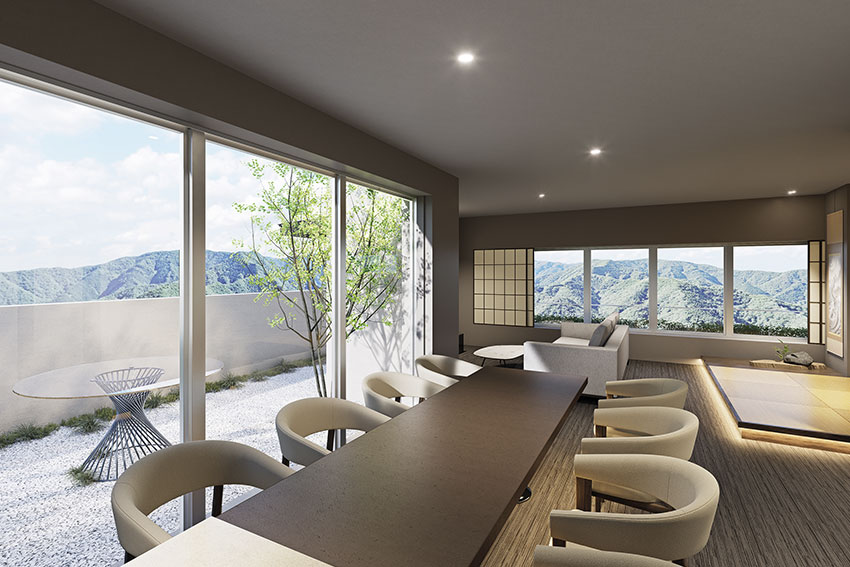
Izumo Hotel Interior
You’ve also mentioned your new Global Luxury Brand, with its first property opening in Ginza. How does this brand differ from Ent Terrace and Jinryu?
We never replicate Ent Terrace is for families and mid-range travelers seeking convenience. Jinryu focuses on Japanese culture, spirituality, and harmony. The Global Design Hotel brand, on the other hand, is about international luxury.
We are collaborating with leading global furniture and design houses—brands like Cassina, ALMS, and Armani—to create rooms that merge art, design, and comfort.
Where Jinryu represents Japanese authenticity, Global Design Hotels express cosmopolitan elegance. The combination allows us to appeal to different types of travelers, from those seeking cultural immersion to those desiring world-class luxury.
Lead Real Estate was founded in 2003 and has grown into a diversified real estate company, with expertise in land development, asset management, hotel operations, real estate investment, and digital platforms. What inspired the move into the hospitality sector?
It was a natural evolution. As developers, we already understood buildings, land, and urban planning. Hospitality allowed us to apply those skills in a more human, experience-driven way.
Our core strengths—speed, creativity, and decisiveness—remain the same. We can evaluate a site, conceptualize a project, and bring it to market quickly. That developer DNA is what gives us a competitive edge in hospitality.
How do your real estate and hotel operations complement each other?
They are inseparable. Because we know the real estate market intimately, we can identify where demand will grow and what kind of development will succeed.
That deep market insight, combined with creative design and execution, allows us to build hotels that are both commercially viable and aesthetically exceptional. The fusion of market knowledge and design innovation is the key to our success.
Finally, imagine it’s 2033—Lead Real Estate’s 30th anniversary. What do you envision for the company at that milestone?
By 2033, I believe Lead Real Estate will be far larger and even more diverse. Our hotel brands will be globally recognized, and we’ll have expanded into multiple international markets.
Our portfolio will include a wide variety of concepts—from family-oriented urban hotels to high-end luxury properties—each representing the best of Japanese hospitality.
I expect that by then, our brand will stand among the leading names in the global hotel industry, with design and innovation at its core.
And personally, I hope to look back, perhaps from a place like Miyajima, and feel proud of how far we’ve come.
To read more about Lead Real Estate, check out this article about them.
For more information, visit their website at:
link